I Was Wrong About the Stratos Project
When I first heard about Stratos, my reaction was the same one most people in Utah had: they want to build a 40,000-acre data center where? In a desert? In a drought? In a state where the Great Salt Lake is shrinking so fast it's become a recurring talking point at the legislature? Are we out of our minds?
I was unhinged about this for about a week. Posting-online unhinged. Ranting-in-the-group-chat unhinged. The kind of unhinged where you're convinced you've cracked the case and everyone else is just behind.
Then I did something that, in retrospect, I should have done first: I read the actual Utah Code. Not articles. Not statuses. Not someone's quote-tweet of a quote-tweet. The source materials. The MIDA Act. The Interlocal Cooperation Act. Box Elder County resolutions 26-11 and 26-12. Water rights studies going back to 1961. Hydrology data from USGS. Box Elder irrigation reports. The actual technical specs on closed-loop dry cooling.
And somewhere in the middle of that, I had to sit down and admit something I really didn't want to admit: I had been wrong about basically all of it. The thing I had in my head, a giant evaporative water sink slurping the Great Salt Lake dry to mine crypto or whatever, was not the thing being built. It was a thing I made up because I hadn't read anything yet, and the made-up version was extremely satisfying to be mad about.
So this is the rare blog post where I publicly change my mind. RIP to Past Josh. Confidence was a 10 out of 10. Accuracy was a 2.
The Water Thing Was the Big One
This was my whole opening salvo. You can't put a data center in a desert. Data centers use enormous amounts of water for cooling. Utah is in a megadrought. The Great Salt Lake is a drying ecological catastrophe in progress. Slam dunk, right? Roll credits.
Yeah, no. My mental model was about twenty years out of date.
Modern hyperscale data centers (think Google, Microsoft, Amazon scale), the kind being built now and not the kind built in 2005, use closed-loop dry cooling. The cooling fluid runs through sealed pipes, heat dumps to the air through what are basically giant car radiators, and the water inside the loop barely moves. The system loses almost nothing to evaporation. The "data centers drink the lake" thing comes from older designs with open evaporative cooling towers, which is a completely different architecture. I was yelling about a 2005 problem in 2026, which is the technological equivalent of being mad about Blockbuster late fees.
Stratos is being designed with closed-loop cooling. The water rights they're acquiring are about 3,000 acre-feet (an acre-foot is about 326,000 gallons) of on-site supply, which doesn't come from the Great Salt Lake watershed. And, this is the part that really got me, the land being converted is mostly former ranching and dryland farming. Box Elder irrigation data puts agricultural consumption at roughly 3 acre-feet per acre per year. Take 40,000 acres out of irrigation and you save something like 125,000 acre-feet annually. The data center's actual water draw is a rounding error against that.
In other words, the land-use change itself probably nets positive for the lake, before you even count the cooling design. I did not want this to be true. I checked the math twice. Then I checked it a third time because I really, really did not want this to be true. Still true. Past Josh remains 0 for 1.
The Tax Structure Is Actually Reasonable
This was my second-favorite thing to be mad about. "MIDA captures the tax revenue! 80% gets rebated to the developer! The county gets nothing! Kevin O'Leary is robbing us in broad daylight!" I had a whole bit.
Okay, kind of. Let's actually unpack it instead of yelling percentages.
First, what MIDA even is: the Military Installation Development Authority, a state agency that can create special tax zones around big projects (originally for military bases, now expanded). That's the mechanism Stratos is using.
A rebate just means the developer pays the tax and then gets most of it back. The 80% rebate applies to the property tax on the compute campus (the part where the actual data center buildings sit), which is a specific zone, not the whole 40,000 acres. And this kind of deal, sometimes called TIF or tax increment financing (a developer's future taxes paying back the cost of building the project), is how big industrial projects like this actually get built. The developer fronts the cost of building everything, including roads, water, power, and other infrastructure that ends up serving the surrounding area, and they get some of that money back over time. It's not a giveaway. It's the financing structure that makes the project possible. It's how every large industrial project in the last fifty years has worked. I was treating standard public-finance plumbing like it was Ocean's Eleven.
The county isn't getting zero. The numbers being cited, $30M/year in Phase 1 and $108M/year at full buildout, are real, and they reflect what's left for the county after the rebate, under the interlocal agreement (the contract between the county and MIDA that spells out who gets what). For context, Box Elder County's entire annual general fund is in the neighborhood of $30M. Phase 1 alone could roughly double the county's tax base. Full buildout could be transformative for a rural county that has been bleeding young people for a generation. That's not "the county gets nothing." That's "the county gets, potentially, everything."
And the energy tax going from 6% to 0.5% is the trade for the developer building their own power generation on-site. That's not Utah ratepayers absorbing the cost of 9 gigawatts of new demand. That's the developer building a private power plant to serve a private load. If anything, it takes pressure off the rest of the grid. Which is, again, the opposite of what I was claiming. I was 0 for 2 and didn't know it.
The Jobs Argument I Was Embarrassingly Wrong About
I had the standard knee-jerk response here too: data centers don't create jobs, they're mostly automated. I'd seen the stat that a typical hyperscale facility employs only a few hundred people once operational, and I deployed it constantly, with great confidence, like it ended the argument.
It did not end the argument. It barely started the argument.
First, construction. A 40,000-acre buildout over a decade-plus is thousands of jobs in trades, logistics, engineering, and site work. That's not a footnote. That's a generational construction project for the region. Pretending it doesn't count because it ends eventually is like pretending your job doesn't count because you'll quit it someday.
Second, operations underestimate the ecosystem. The data center itself may employ a few hundred. The on-site power generation employs more. The supporting infrastructure (security, maintenance, food service, transportation, vendor relationships) multiplies that. And then there's the secondary economic activity: housing, retail, schools, services. Rural Box Elder County has been begging for an economic anchor for thirty years, and we're sitting here arguing about whether the jobs are "real" enough.
Third, the wages are fine. Data center operations roles trend technical and pay accordingly. These aren't minimum wage jobs. The "but they're not real jobs" framing is wildly condescending toward the people who would actually be doing them.
I don't want to oversell this. It's not 50,000 jobs. The "this will single-handedly fix rural Utah" framing is overcooked. But "data centers don't create jobs" is also wrong, and I was repeating it confidently without checking, which is the worst kind of wrong to be.
Where I Still Have Concerns
I'm not a convert in the cult-member sense. I'm not going to start showing up to county meetings in a Stratos Or Bust t-shirt. There are two things I'd still change if I could.
One: I really, really wish they would make Exhibit 1 public.
Exhibit 1 to Resolution 26-12 is the actual interlocal cooperation agreement between Box Elder County and MIDA. It's the document that governs the tax flow, the obligations on both sides, and the guardrails on what the developer can and can't do. The county has denied at least one records request for it on the grounds that it's "not yet signed and remains a draft."
I get the legal reasoning. Under GRAMA (Utah's public records law), drafts aren't usually something the public can demand. But the political reasoning is terrible. This is a generational decision for the county. The agreement that governs it should be public before it's signed, not after, because the whole point of an open-government framework is that the public gets to weigh in while there's still a deal to shape. "It's still a draft" is the kind of move that erodes public trust even when the underlying decision is fine. It's the bureaucratic version of "trust me bro."
If the deal is as good as everyone says, and from what I've read I think it largely is, show the agreement. Sunlight only helps when you have a good case. Treating the document like it's classified makes people assume it must be, even when it probably isn't.
Two: I wish they were using nuclear instead of natural gas.
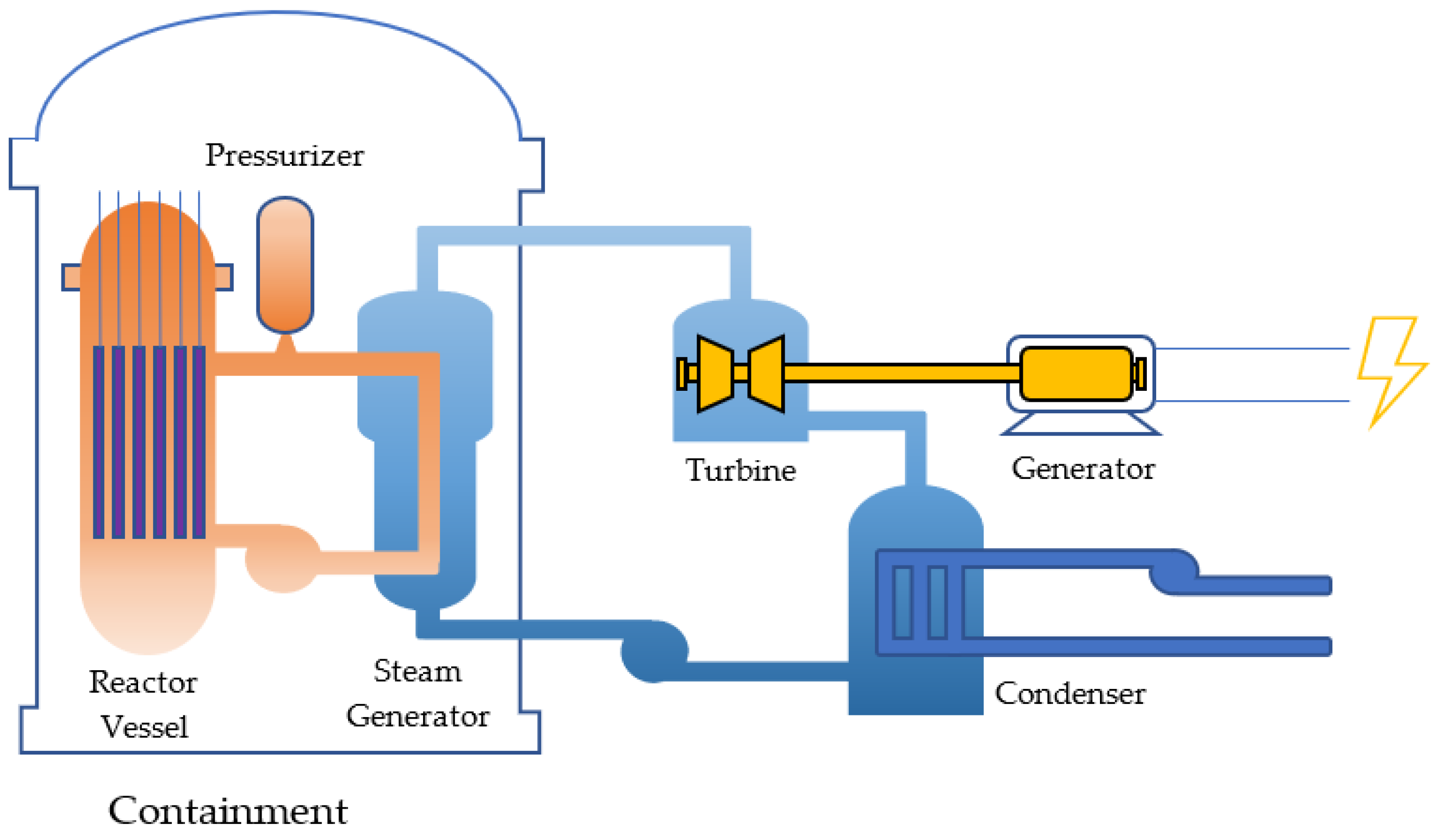
The on-site power plan is natural gas, fed by the Ruby Pipeline. Natural gas at this scale is real emissions, not catastrophic but not nothing, and it locks in a fossil fuel footprint for the lifespan of the facility. A 9 GW load is exactly the kind of demand small modular reactors (SMRs, a new generation of smaller, factory-built nuclear) are designed for. Data centers run 24/7 at a constant draw, which is the dream customer for nuclear. We're talking about the perfect customer for SMRs walking into the room, looking at the menu, and ordering natural gas. Come on.
Nuclear has its own politics, and I understand why a developer trying to break ground on a contentious project wouldn't want to also pick the nuclear fight on top of everything else. But "we picked the easier permitting path" isn't the same as "we picked the right energy source," and on the energy question specifically I think they took the path of least resistance instead of the path of best outcome.
That said: a natural gas plant the developer pays for entirely is still better than 9 GW dumped onto a coal-heavy grid the public pays for, so even the worst case here is an upgrade over the alternative. Depressing bar to clear. Cleared regardless.
The Process Question
A lot of the public anger about Stratos isn't really about water or taxes. It's about process. The project was approved fast. MIDA's whole structural role is to bypass normal county land-use authority. A grassroots group called BEAR (Box Elder Accountability Referendum) filed two referendums within four days of the vote (a referendum lets voters approve or reject something their elected officials already decided), aiming for the November 2026 ballot.
I'm sympathetic to the process complaint. I'm not sympathetic to where it usually lands, which is therefore the underlying decision is wrong. Those are two completely different arguments, and smashing them together is how good projects get killed by bad vibes. "I don't like how this was done" and "this shouldn't be done" are different sentences. They're not even the same shape.
You can think the process was rushed and think the project is sound. You can wish for more transparency and support the outcome. Holding two thoughts at once is allowed. It's also less fun than picking a side and yelling, which is probably why nobody does.
What Changed My Mind
If I had to summarize: I changed my mind because I stopped reading reactions and started reading sources. Not articles. Not opinion pieces. Not someone summarizing the situation in a thread. The actual law. The actual filings. The actual technical specs. Revolutionary methodology, I know.
The reactions on both sides are doing a lot of work to make this look simpler than it is. The pro side wants you to think it's a pure economic miracle with zero downside. The anti side wants you to think it's an ecological catastrophe with no upside. Neither is true. The reality is a real industrial project with real tradeoffs, designed by people who appear to have actually thought about the cooling problem, structured through a financing mechanism that's reasonable if imperfect, and pushed through a process that was faster than it should have been but produced a deal that mostly holds up.
Going from "this is a disaster" to "this is a defensible decision with two specific things I'd change" is, I'll admit, not the most exciting blog post arc. The internet rewards purity. I would love to tell you Stratos is going to save Utah, or that it's going to kill the lake, because either of those would do numbers. But it's neither. It's a complicated project that, on net, I now think is a good thing for the state.
The first-party sources are below. The law says what it says. The science says what it says. Read them. Form your own opinion. Just do the reading first. That was the move I should have made before I got mad, and the move I'd encourage anyone still mad about this to make now. Don't be Past Josh. Past Josh was loud, confident, and almost entirely wrong.
Sources
Utah Code
MIDA Act (Title 63H, Chapter 1)
- Chapter overview
- Full chapter PDF
- § 63H-1-204 — MIDA energy tax
- § 63H-1-205 — MIDA accommodations tax
Interlocal Cooperation Act (Title 11, Chapter 13)
- Chapter overview
- § 11-13-103 — Definitions
- § 11-13-202 — Authorization for agreements
- § 11-13-202.5 — Approval requirements
- § 11-13-209 — Filing with records keeper
Open and Public Meetings Act (Title 52, Chapter 4)
- Chapter overview
- § 52-4-102 — Declaration of public policy
- § 52-4-202 — Public notice of meetings
- § 52-4-203 — Minutes / public materials
GRAMA (Title 63G, Chapter 2)
Referendum
Box Elder County
- Stratos Project main page
- Stratos Project Fact Sheet
- Agenda Center
- Clerk's department
- eRecord (recorder's office)